Seaside Fish and Chips: How to Judge a Coastal Chippy on Holiday
You can judge a coastal chippy from twenty metres away. The smell reaches you first — hot oil, vinegar, salt, a faint edge of the sea. Then the paper bundles held at chest height against the wind. Then the queue, shuffling forward or standing still like a photograph. By the time you reach the door most of the decision is made, and the next fifteen minutes will either become part of the holiday or a small, greasy regret.
Seaside fish and chips is a different sport from the chippy at the end of your road. At home you can give somewhere a second chance next Friday. On holiday you get one lunch, one evening, one tide. The things worth judging shift accordingly: freshness over menu length, turnover over décor, and the view is not a small matter.
Freshness: Ask What Came Off the Boat
Start with the fish, because no amount of good frying rescues a tired fillet. Good coastal shops put up a board naming what is in today — haddock, cod, hake, plaice, lemon sole, skate, whatever the boats and buyers brought in. That board is not decoration. It is a confession. It tells you whether the kitchen is cooking what the coast is actually giving it, or working patiently through a freezer inventory in alphabetical order.
Specificity is the tell. “Today’s catch” is a fine thing to read in a harbour town when you can see the harbour from the window. It is a much weaker thing to read forty metres inland, in a shop that opens at eleven and closes at nine and has not changed its menu since 2009. Naming the species — and the boat, if they can — is a small act of pride, and pride generally turns up on the plate.
Look into the cold cabinet if there is one, and watch the fillets being lifted out of it. Fresh fish has a wet, translucent shine and holds its shape when handled; it does not slump, weep, or smell of much beyond cold sea. If the only thing you can smell is batter, that is often the point. Batter covers a great deal of sin, and everyone behind the counter knows it.
Then ask. Not a quiz, just a question: what would you have? A good counter answers in a second and with enthusiasm — “the hake’s lovely today,” or “if you want cod, wait until the next fry comes up.” A shrug and a wave at the whole menu tells you it does not matter to them, which is a fair prediction of how much it will matter to you.
Turnover: The Queue Is the Review
A queue is not a delay. It is evidence. Fried fish does not improve with keeping, so a busy shop sells the batch it has just cooked and immediately starts another, while a quiet shop holds what it has and hopes. That is why you should never be put off by a line, and always be a little wary of an empty room at half past twelve on a Saturday.
Watch the rhythm rather than the length. A steady shuffling line that moves about every minute is better than a crowd standing three deep because the fryer has backed up. Count the parcels leaving the door. If two or three people walk out with wrapped bundles each minute, the oil is hot, the fish is rotating, and you are in the right place.
Size the queue against the town, too. Ten people in July is nothing at all. Ten people in February in a village of four hundred is a queue of locals — and locals do not queue for bad fish.
Fryer Craft: Batter, Oil and the Sound of It
You can learn a great deal in the thirty seconds after you order, without tasting anything. Listen. A proper fry should hiss and roar, a big confident sound like a wave pulling back over shingle. Silence, or a thin fizz, means the oil is tired or not hot enough, and both produce the same unhappy result: a pale, oily jacket that slides off the fish like a wet coat.
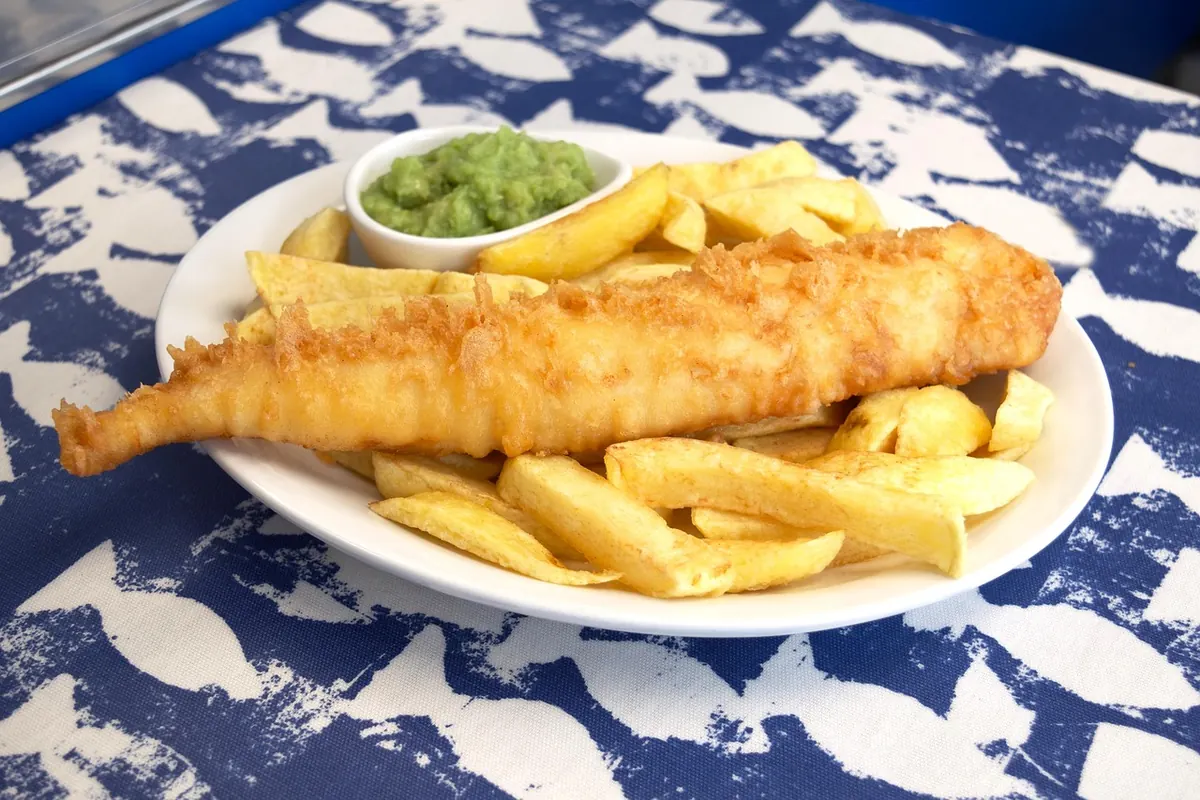
Then look at the batter when it lands. It should be uneven and blistered, lighter at the edges where it has bubbled and set, and it should crack rather than bend when you break it. Colour is a matter of local taste — some shops like it properly gold, others leave it pale and crisp — but it should never be dark brown, which means old oil, and never so thick that you have to hunt for the fish inside it.
And the chips. Fresh-cut chips are pale, slightly irregular, and darken in patches; frozen ones are uniform, tidy and bone-white before frying. Both can be cooked well, but only one of them tastes of potato. A good shop drains them properly as well — no wet patch spreading through the paper before you have even reached the promenade.
How to Order Like Someone Who Lives There
- Ask for it open if you are eating outside on a bench, wrapped if you are walking. It is not fussiness; it is how the food survives the journey.
- Order one portion of chips between two unless you have already seen a portion come out of the door and know what you are taking on.
- Salt and vinegar at the counter, not later. It goes on while the food is hot, and the paper holds it in.
- Say yes to scraps if they are offered — the little crunchy shards of batter from the bottom of the fryer. They are a free, salty bonus and a sign of a shop relaxed about what it is doing.
- Add a pickled egg, a battered sausage or a pot of mushy peas if you want the full grammar of the meal. Nobody will judge you, and the staff will understand that you have done this before.
- Eat within sight of the water. Everything about the food improves with a sea wall, a bit of wind, and one hopeful gull keeping its distance.
Red Flags, Fast
- A menu longer than the counter. Ten kinds of fish, plus burgers, pizza and kebabs — something in that kitchen is not being fried to order.
- Batter that slides off in one piece, or leaves a wet grey layer between crust and flesh.
- Chips that are pale outside and waxy in the middle, especially when the shop is busy.
- A bin outside full of pre-battered frozen fillets, still in their boxes.
- Staff who cannot tell you what is in today, or seem startled that you asked.
- Ketchup bottles on every table. Not a crime, but it does suggest a kitchen that is not confident about its own flavour.
Fish and chips eaten at the coast is not really a meal. It is a way of standing still in front of the sea with both hands full, and there is no bad day for it — only bad batter.
So the method is simple enough to use in the time it takes to cross the road. Read the board, count the queue, listen to the fryer, look at the batter before you commit, and trust the smell that stopped you in the first place. If the fish is fresh, the oil is hot and the paper starts to go translucent in your hands before you have reached the railings, you have found the one worth coming back for.
And you will come back. Same week, next year, same tide, standing in the same line with the wind in your collar, wondering why a bag of chips eaten outdoors tastes better than anything served on a plate.
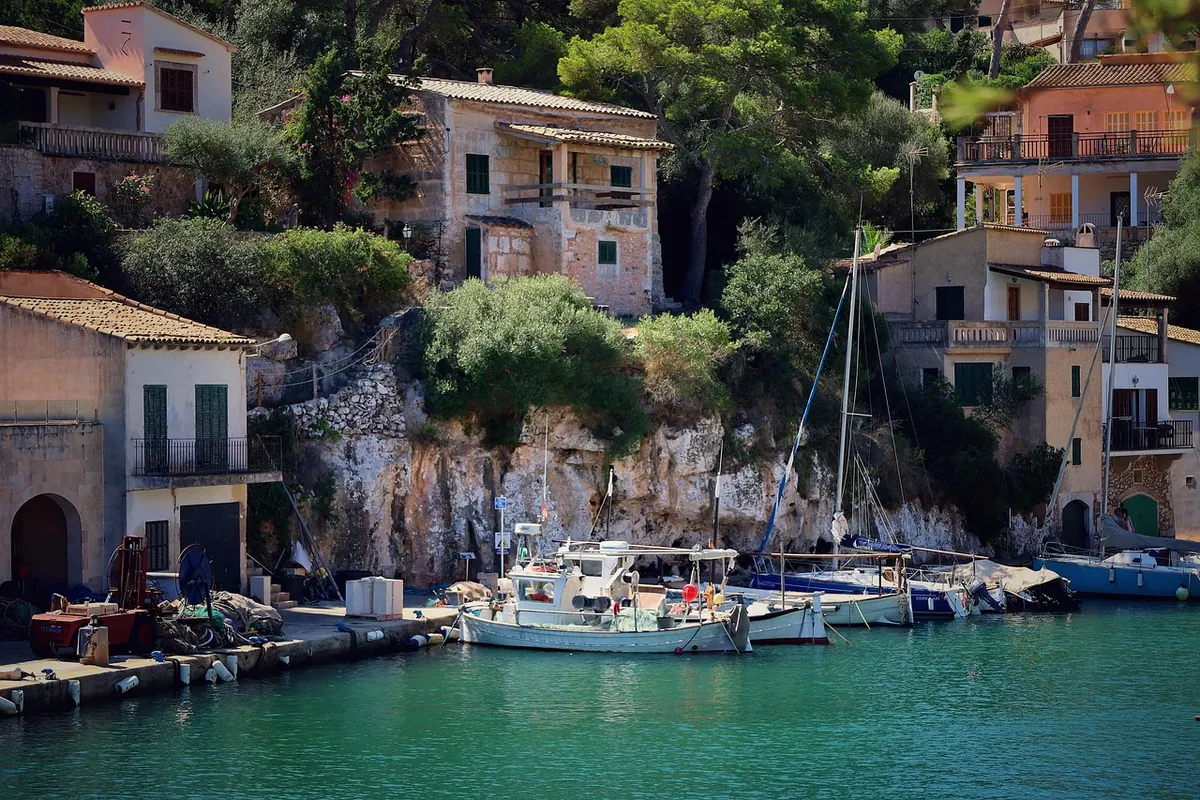
Photo: Tho-Ge / Pixabay